Payroll Management Software
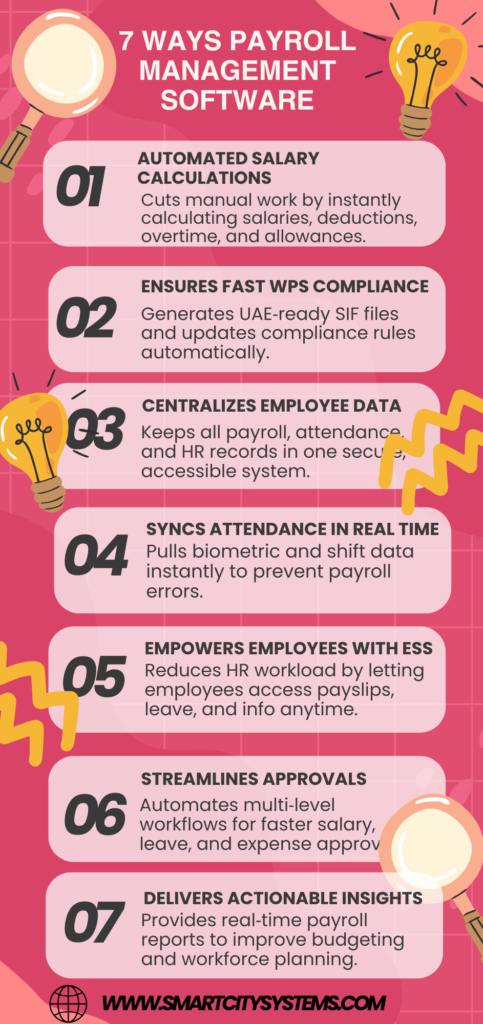
7 Ways Payroll Management Software Increases Business Efficiency
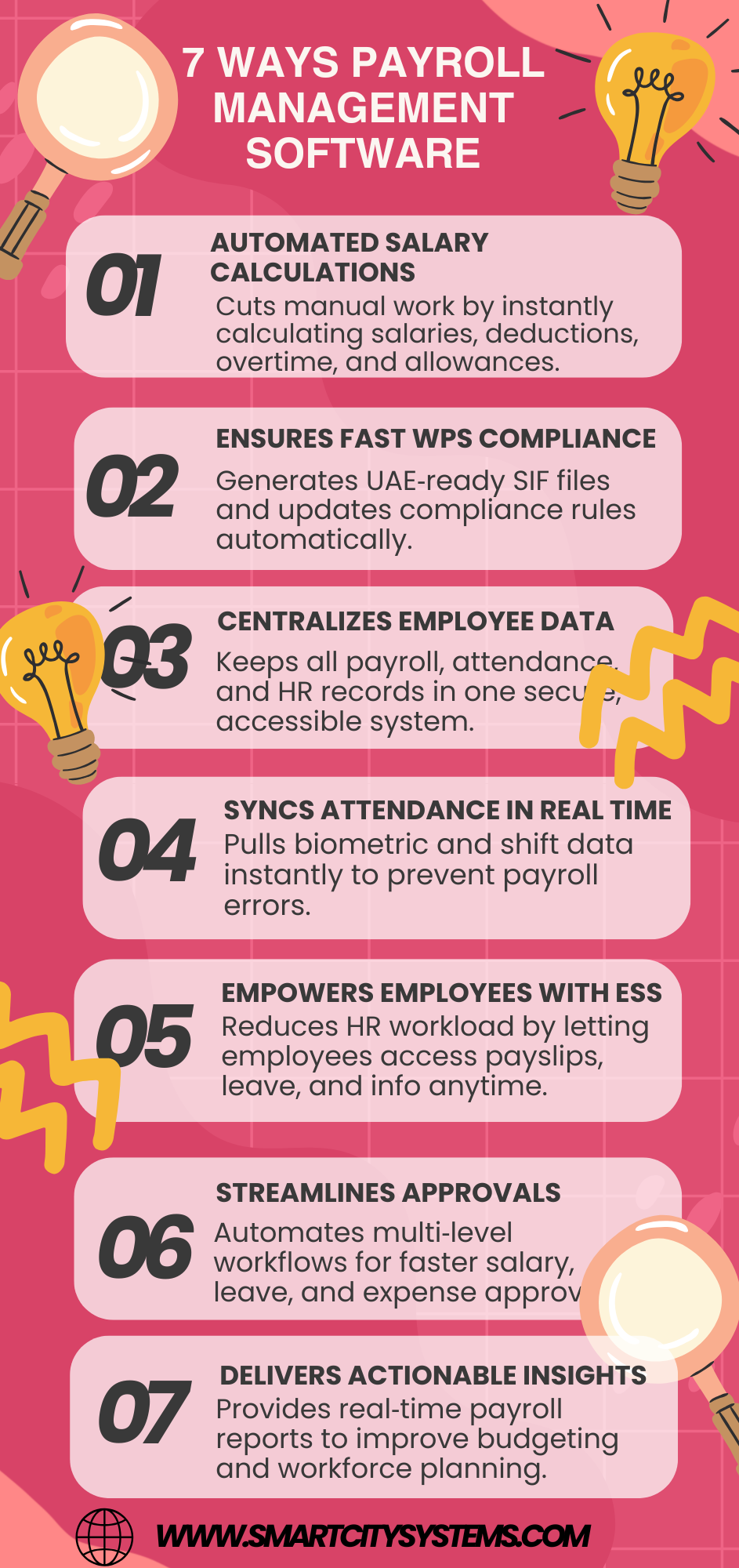
Payroll administration is one of the most important responsibilities for any business. Employees expect to be paid accurately and on time, while businesses must comply with tax regulations, labor laws, and reporting requirements. However, handling payroll manually can be time-consuming, error-prone, and stressful.
Payroll management software is crucial in this situation. It reduces administrative responsibilities, automates tedious payroll tasks, and enhances business operations. Think of payroll software as the engine of a car—when it runs smoothly, the entire business moves forward without unnecessary delays.
Whether you own a small business or manage a growing enterprise, payroll software can transform how you handle employee compensation and workforce management.
Understanding Payroll Management Software
Payroll management software is a digital solution designed to automate payroll-related activities. These consist of payroll reporting, direct deposits, overtime monitoring, tax deductions, attendance integration, and salary computations.
Businesses can use a centralized platform to expedite payroll procedures rather than depending on spreadsheets and manual calculations. This reduces complexity and ensures payroll operations remain organized and efficient.
Why Business Efficiency Matters
The capacity to accomplish goals with the least amount of time, effort, and resources is known as business efficiency. Effective businesses might focus more on growth, innovation, and customer service rather than on administrative tasks.
Payroll is one of the most repetitive administrative functions. Enhancing payroll efficiency has a direct effect on the productivity of the entire company, freeing up more time for strategic tasks for the finance and HR departments.
Automates Payroll Processing
Eliminates Repetitive Tasks
Automation is one of the main benefits of payroll management software. Instead of manually calculating salaries every month, the software automatically processes:
- Basic salaries
- Overtime payments
- Bonuses and incentives
- Tax deductions
- Leave deductions
- Employee benefits
Automation significantly reduces the workload on HR and finance teams.
Ensures Consistent Payroll Cycles
Automated workflows help businesses maintain consistent payroll schedules. Employees receive their salaries on time, every time, without delays caused by manual processing.
Increases Productivity
Employees may concentrate on higher-value tasks like workforce planning, employee engagement, and performance management when payroll processing is automated.
Reduces Human Errors
Minimizes Calculation Mistakes
Manual payroll calculations often result in errors involving:
- Salary computations
- Tax deductions
- Overtime payments
- Benefits calculations
Even a small mistake can create employee dissatisfaction and compliance issues. Payroll software uses predefined formulas to ensure accurate calculations.
Improves Data Accuracy
Automated systems eliminate duplicate entries and reduce the risk of incorrect information being entered into payroll records.
Builds Trust
Payroll processing that is accurate fosters trust between companies and employees. Workers feel more confident when they consistently receive correct payments.
Saves Valuable Time
Faster Payroll Processing
Traditional payroll methods may require several days to complete each month. Payroll management software can process payroll in a matter of hours or even minutes.
Quick Access to Information
HR managers can instantly retrieve employee payroll records, tax documents, and salary histories without searching through stacks of paperwork.
Streamlined Approvals
Many payroll systems include automated approval workflows, making it easier for managers to review and approve payroll information quickly.
The time saved translates directly into increased operational efficiency.
Enhances Compliance Management
Stays Updated with Regulations
Tax laws and labor regulations frequently change. Payroll software automatically updates compliance requirements, helping businesses remain compliant.
Reduces Legal Risks
Compliance failures can result in penalties, fines, and legal complications. Payroll software helps businesses avoid costly mistakes by applying the latest tax and labor rules.
Generates Compliance Reports
Most payroll systems provide built-in compliance reports that simplify audits and regulatory submissions.
By automating compliance tasks, businesses can reduce risks while improving operational reliability.
Improves Employee Satisfaction
Timely Salary Payments
Employees value receiving their salaries on time. Payroll software ensures timely payments through automated scheduling and direct deposit capabilities.
Self-Service Portals
Many modern payroll systems provide employee self-service portals where workers can:
- View payslips
- Download tax documents
- Update personal information
- Track leave balances
This convenience improves employee experiences and reduces HR inquiries.
Greater Transparency
Payroll information is readily accessible to employees, fostering transparency and lowering misunderstandings over wage computations.
Simplifies Record Keeping
Centralized Data Storage
Payroll software stores all payroll-related information in a single database. This includes:
- Employee records
- Salary histories
- Tax documents
- Attendance data
- Benefits information
Easy Retrieval
Finding payroll records becomes simple and fast, especially during audits or employee inquiries.
Improved Data Security
Digital payroll systems often include advanced security measures such as encryption, access controls, and automated backups to protect sensitive employee information.
Provides Real-Time Reporting
Better Decision-Making
Real-time reports produced by payroll software assist management in making wise business decisions.
Payroll Cost Analysis
Businesses can analyze payroll expenses by department, project, or location to identify opportunities for optimization.
Workforce Insights
Detailed reports provide valuable insights into:
- Labor costs
- Overtime trends
- Employee attendance
- Compensation patterns
These insights support smarter workforce management strategies.
Supports Business Growth
Scales with Your Organization
As companies grow, payroll complexity increases. Payroll software can easily accommodate:
- More employees
- Multiple departments
- Multiple locations
- Different pay structures
Reduces Administrative Burden
Growing businesses often struggle with increasing administrative tasks. Payroll automation prevents payroll management from becoming a bottleneck.
Supports Expansion
Whether hiring locally or internationally, payroll software provides the flexibility needed to support expansion plans efficiently.
Integration with HR Systems
Creates a Unified Workforce Platform
Payroll software nowadays frequently connects with platforms for recruitment, attendance tracking, and HR administration.
Eliminates Duplicate Data Entry
Employee information entered once can automatically flow across multiple systems, reducing administrative work.
Improves Accuracy
Integrated systems ensure consistency across HR and payroll records, minimizing discrepancies.
Cost Reduction Benefits
Lower Administrative Costs
Manual payroll processing requires significant labor hours. Automation reduces these costs substantially.
Fewer Payroll Errors
Payroll mistakes can be expensive. Correcting errors consumes time and resources, while compliance penalties can be even more costly.
Reduced Paper Usage
Digital payroll systems reduce reliance on printed payslips, forms, and reports, contributing to both cost savings and environmental sustainability.
Choosing the Right Payroll Software
Assess Your Business Needs
Every organization has unique payroll requirements. Consider factors such as:
- Company size
- Industry requirements
- Compliance needs
- Integration requirements
Look for Essential Features
Important features include:
- Automated payroll processing
- Tax management
- Employee self-service
- Reporting capabilities
- Mobile accessibility
- Security features
Evaluate Vendor Support
Long-term profitability depends on consistent software updates and dependable customer service.
Future of Payroll Automation
Artificial Intelligence and Automation
Modern payroll solutions increasingly use AI to identify payroll anomalies, improve forecasting, and enhance efficiency.
Cloud-Based Payroll Systems
Cloud payroll platforms allow businesses to manage payroll from anywhere while ensuring secure access to data.
Advanced Analytics
Future payroll systems will provide deeper workforce insights that support strategic decision-making.
Businesses that adopt advanced payroll technologies today will be better prepared for tomorrow’s workforce challenges.
Conclusion
Payroll management is far more than simply paying employees. It plays a critical role in operational efficiency, compliance, employee satisfaction, and business growth. Manual payroll processes can slow down operations, increase errors, and consume valuable resources.
By implementing payroll management software, businesses can automate repetitive tasks, improve accuracy, save time, strengthen compliance, and gain valuable workforce insights. From small businesses to large enterprises, payroll software provides the foundation for a more efficient and productive organization.
Investing in the right payroll solution is not just a technology upgrade—it is a strategic step toward sustainable business success.
Frequently Asked Questions (FAQs)
1. What is payroll management software?
Payroll management software is a digital solution that automates salary calculations, tax deductions, payroll processing, compliance management, and employee payroll reporting.
2. How does payroll software improve business efficiency?
It increases compliance, saves time, minimizes errors, automates tedious payroll operations, and frees up HR teams to concentrate on key business initiatives.
3. Can payroll software help reduce payroll mistakes?
Yes. Automated calculations and predefined rules significantly reduce human errors in payroll processing.
4. Is payroll management software suitable for small businesses?
Absolutely. Small businesses can benefit from reduced administrative workloads, improved accuracy, and better compliance management.
5. What features should businesses look for in payroll software?
Key features include payroll automation, tax management, reporting tools, employee self-service portals, compliance updates, security controls, and HR system integration.