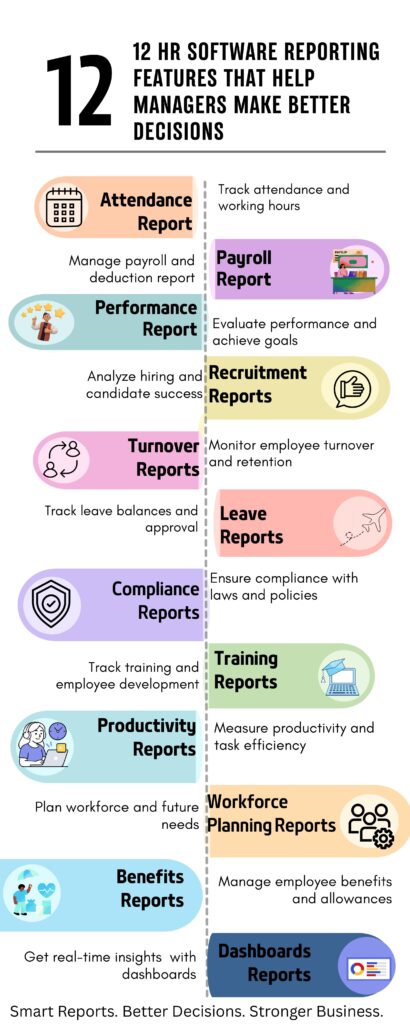
12 HR Software Reporting Features That Help Managers Make Better Decisions Managing employees without accurate data is like driving a car without a dashboard. You may keep moving, but you won’t know your speed, fuel level, or warning signs ahead. That’s exactly why HR software reporting features are important for modern businesses. Today’s managers need real-time insights to handle attendance, payroll, recruitment, employee performance, and compliance efficiently. HR software transforms raw employee data into meaningful reports that help organizations make smarter decisions faster. Instead of spending hours sorting out spreadsheets and paperwork, managers can access detailed reports with a few clicks. These reports improve productivity, reduce errors, and help businesses plan for future growth. In this article, we’ll explore exactly 12 HR software reporting features that help managers make better business decisions. Employee Attendance Reports Employee attendance reports help managers track working hours, late arrivals, overtime, and absenteeism. These reports improve workforce discipline and ensure accurate payroll processing. With automated attendance tracking, businesses can reduce manual errors and manage shifts more effectively. Additionally, managers are able to spot trends in attendance before they affect output. Key Benefits Improves punctuality Reduces time theft Supports accurate payroll Simplifies shift scheduling Payroll Reports Payroll reports provide complete salary details, deductions, bonuses, overtime calculations, and tax information. This reporting feature ensures employees are paid accurately and on time. Additionally, payroll reporting assists managers in keeping an eye on labor costs and upholding organizational financial integrity. Key Benefits Reduces payroll errors Simplifies tax calculations Tracks overtime costs Improves salary accuracy Performance Evaluation Reports Performance reports allow managers to measure employee achievements, goals, and overall productivity. Instead of relying on assumptions, businesses can evaluate employees using real data. These reports also support fair appraisals and employee development plans. Key Benefits Encourages employee growth Improves performance reviews Identifies skill gaps Supports fair promotions Recruitment and Hiring Reports Hiring reports help organizations analyze recruitment costs, candidate sources, and hiring success rates. Managers can easily identify which recruitment methods deliver the best results. This feature helps businesses hire the right people faster while reducing recruitment expenses. Key Benefits Improves hiring quality Reduces recruitment costs Tracks candidate performance Speeds up hiring decisions Employee Turnover Reports Employee turnover reports show how many employees leave the company and why. High turnover can increase hiring costs and affect productivity. By understanding resignation patterns, managers can improve employee satisfaction and retention strategies. Key Benefits Improves employee retention Identifies workplace issues Reduces hiring expenses Supports better engagement Leave Management Reports Leave reports track annual leave, sick leave, unpaid leave, and employee holiday balances. Managers can quickly view employee availability and avoid scheduling conflicts. Automated leave reporting makes approval processes faster and more organized. Key Benefits Prevents staffing shortages Simplifies leave approvals Improves workforce planning Ensures policy compliance Compliance Reports Compliance reporting helps businesses follow labor laws, company policies, and government regulations. These reports maintain accurate employee records for audits and legal purposes. Organizations can avoid penalties and maintain transparency with automated compliance tracking. Key Benefits Reduces legal risks Supports audits Maintains accurate records Improves policy compliance Training and Development Reports Training reports help managers track employee learning progress, certifications, and completed courses. This feature ensures employees receive proper skill development opportunities. Businesses can also identify training gaps and improve workforce capabilities. Key Benefits Tracks employee learning Identifies skill shortages Improves workforce development Supports career growth Employee Productivity Reports Task completion, project performance, and personnel efficiency are all measured by productivity reports. Managers can identify high-performing employees and detect workflow problems quickly. It helps companies track performance and continuously increase efficiency, much like a fitness tracker for your employees. Key Benefits Improves task management Increases accountability Enhances team performance Identifies workflow delays Workforce Planning Reports Workforce planning reports help organizations forecast future staffing requirements and resource allocation. Managers can prepare for expansion, seasonal demand, or organizational restructuring. This reporting feature supports smarter long-term business planning. Key Benefits Supports future planning Prevents understaffing Controls labor costs Improves resource management Benefits Administration Reports Benefits reports help businesses manage employee insurance, bonuses, allowances, and retirement plans efficiently. Managers can analyze benefit usage and control overall costs. Providing the right employee benefits also improves job satisfaction and retention. Key Benefits Improves employee satisfaction Tracks benefits costs Simplifies administration Ensures accurate enrollment Real-Time Dashboard Reports Real-time dashboard reporting provides instant access to key HR metrics through visual charts and summaries. Managers can monitor attendance, payroll, hiring, and performance data from one centralized dashboard. Without having to wait for manual reports, this capability enables organizations to make decisions more quickly and intelligently. Key Benefits Provides instant insights Improves decision-making Enhances data visibility Supports real-time monitoring Conclusion HR software reporting features play a major role in helping businesses manage employees more effectively. From payroll tracking to workforce planning, these tools provide accurate insights that improve decision-making and business performance. Managers no longer need to rely on manual spreadsheets or guesswork. With the right HR reporting features, businesses can improve productivity, reduce errors, increase employee satisfaction, and plan for future growth with confidence. As companies continue to grow, investing in advanced HR software reporting tools can become one of the smartest business decisions for long-term success. FAQs 1. What are HR software reporting features? HR software reporting features are tools that generate detailed employee-related reports such as payroll, attendance, recruitment, and performance analysis. 2. Why are HR reports important for managers? HR reports help managers make informed decisions using accurate employee data and workforce insights. 3. Can HR software reduce payroll mistakes? Yes, HR software automates payroll calculations and reporting, reducing manual errors significantly. 4. How do attendance reports help businesses? Attendance reports improve workforce discipline, track working hours, and support accurate payroll processing. 5. What is the main advantage of real-time HR dashboards? Real-time dashboards provide instant access to important HR data, helping managers respond quickly and make faster decisions.